
What Are High-Altitude Platform Stations (Haps) Explained
1. HAPS Occupy a Sweet Spot Between Earth and Space
It is time to forget the binary distinction of ground towers versus orbiting satellites. Platform stations operating at high-altitudes work in the stratosphere. Typically, they are between 18 and 22.2 kilometers above sea level – an atmosphere that is which is so tranquil and stable that a properly designed aircraft can keep its position with astonishing accuracy. The altitude is sufficient to be able to cover huge geographic areas by a single vehicle yet it is close enough to Earth which means that the latency of signals is low, and the hardware doesn't need to face the severe radiation conditions that are characteristic of space. It's an underexploited area of sky and the aerospace industry is only now taking the first steps to make it a reality.
2. The Stratosphere's Air is Calmer Than You'd Expect
One of the most baffling aspects of stratospheric flight the stability of the environment as compared to the turbulent stratosphere below. In the stratospheric region, cruising altitudes are typically gentle and stable that is crucial for station keeping, which is the ability of the HAPS vehicle to remain in the exact location above the target area. For telecommunications or earth observation missions, drifting just several kilometres away from its position can affect coverage quality. Platforms designed specifically for station keeping, such as those created by Sceye Inc, treat this as a design element rather than as an additional consideration.
3. HAPS stands for High-Altitude Platform Station
The acronym itself is worth dissecting. A high-altitude station is defined under ITU (International Telecommunications Union) frameworks to be a base station on some object at an altitude that is between 20 and 50 km in a specific, nominal static position in relation to Earth. This "station" part is intentional as they're not research balloons drifting across continents. They're telecommunications or observation infrastructures, based on stations operating on a permanent basis. They are less like aircraft and more of low-altitude, reusable satellites with the ability to be repaired, returned, and redeployed.
4. There are a variety of vehicle types Under the HAPS Umbrella
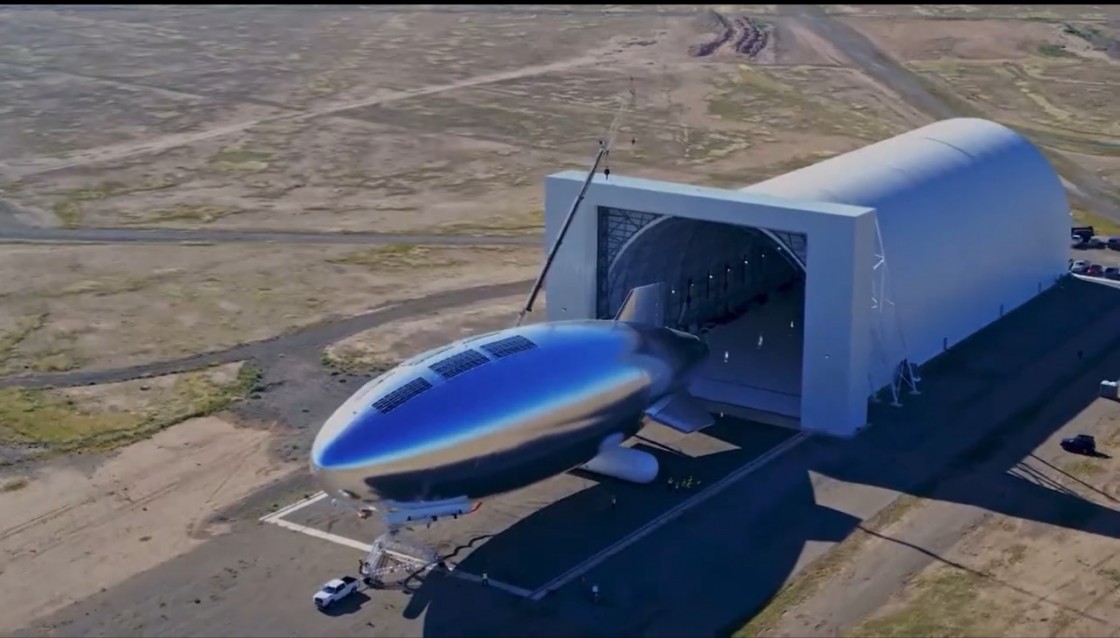
Not all HAPS automobiles look exactly the same. The grouping includes solar-powered fixed-wing aircraft, airships that are lighter than air, and tethered balloon systems. Each has trade-offs around capacity of payloads, endurance, and cost. Airships in particular can carry larger payloads for longer periods since buoyancy does all the lifting and frees up sunlight for the propulsion system, stationkeeping and onboard systems. Sceye's system employs a lighter than air structure specifically designed for airships that maximize payload capability and mission endurance — a deliberate architectural choice that differentiates it from fixed-wing rivals who chase altitude records and carrying only a tiny burden.
5. Power Is the Central Engineering Challenge
A platform that is in the stratosphere for a period of weeks or months without refuelling is solving an energy equation with very limited margin for error. Solar cells store energy during daylight hours, but platforms must be able to endure the darkness on power stored. This is when battery energy density becomes vital. Improvements in lithium-sulfur battery chemical chemistry — with energy density close to 425 Wh/kg make stratospheric endurance missions increasingly viable. In conjunction with a rise in solar cell efficiency, the final goal is to have a closed power loop by generating and storing enough energy each diurnal cycle to sustain full operation indefinitely.
6. The Footprint of Coverage is Huge In Relation to Ground Infrastructure
A single high-altitude station at 20km altitude could make a footprint on the ground of several hundred kilometres. A conventional mobile tower stretches a few kilometres at best. This gap in coverage makes HAPS particularly useful in connecting remote regions or areas that aren't served where the construction of terrestrial infrastructure is prohibitive. A single spacecraft could complete what could otherwise require hundreds or dozens, if not thousands, of ground-based assets — making it one of the more credible proposed solutions to our ever-widening connectivity gap.
7. HAPS can carry multiple Payload Types Simultaneously
As opposed to satellites, which are generally locked into a fixed mission profile at the time of launch, stratospheric platforms are able to carry multiple payloads as well as be reconfigured between deployments. A single vehicle could be equipped with a telecommunications antenna for broadband distribution, in addition to sensors for greenhouse gas monitoring and wildfire detection as well as oil pollution monitoring. Multi-mission flexibility is among of the main economic arguments for HAPS investment – the same infrastructure can serve connectivity and monitoring of the climate simultaneously instead of needing separate assets for each mission.
8. This Technology permits Direct-toCell, as well as 5G Backhaul Applications
From a telecoms standpoint the thing that the thing that makes HAPS special is its compatibility with existing device ecosystems. Direct-to cells allow phones of any type to connect, without the need for specialized hardware, while HAPS acts as high-altitude base station (High-Altitude IMT Base Station) that's essentially a cellphone tower in the air. It can also function as 5G backhaul, connecting ground infrastructures to networks that are larger. Beamforming technology lets users to control the signal precisely to where demand exists rather than broadcasting randomly and thereby increasing the spectral efficiency significantly.
9. The Stratosphere Is Now Attracting Serious Investors
The niche research domain 10 years ago has attracted substantial capital from major telecoms players. SoftBank's agreement with Sceye in the development of a national HAPS system in Japan and aiming to provide pre-commercial services in 2026, represents one of the largest commercial commitments to soaring connectivity to this point. It is a signal of a shift in HAPS being seen as a test-bed to being seen as a viable as a revenue-generating infrastructure- an affirmation that's important to the broader market.
10. Sceye Represents a New Concept for a Non-Terrestrial Infrastructure
Founded by Mikkel Vestergaard, and located in New Mexico, Sceye has positioned itself as a serious long-term contender in what's truly a frontier area in aerospace. The company's primary goal is to integrate endurance, payload capacities, and multi-mission capability is an assumption that stratospheric platforms can become an ongoing layer of infrastructure across the globe that is not a novelty or a gap-filler and a real third layer between the terrestrial network and orbital satellites. For connectivity, monitoring of climate, or disaster response, high elevation platform stations are starting to appear less like a novel idea and more like a logical part of how humanity monitors and interacts with its planet. Follow the best sceye earth observation for more tips including what is haps, sceye haps status 2025 2026, Sceye Softbank, sceye haps project updates, softbank sceye partnership, sceye haps softbank japan 2026, Wildfire detection technology, Sceye News, Real-time methane monitoring, sceye haps softbank japan 2026 and more.
How Stratospheric Platforms Are Reshaping Earth Observation
1. Earth Observation has always been constrained By the Observer's Location
Every improvement in humanity's capacity to study the Earth's surface has come from locating an improved vantage point. Ground stations had local accuracy but were unable to extend. Aircraft added range however, they ate oil and required crews. Satellites delivered global coverage however, they also brought distances that traded precision and revisit frequency with respect to scale. Each step in elevation solved some problems while creating additional ones. The compromises embedded in each approach have affected what we know about our planet and most important, what we not able to discern enough to decide on. Stratospheric platforms are avantage position that is situated between aircraft and satellites and can help solve many of the most persistent trade-offs, rather than shifting the two.
2. Persistence Is the Capability to Observe It Changes Everything
The most transformational thing the stratospheric platforms can provide for earth observation does not depend on resolution nor the coverage area, and certainly not sensor sophistication. It is the persistence. The ability to observe the same spot over and over again, for a period of days or weeks at a time, with no gaps in the data record, shifts the nature of questions that earth observation can answer. Satellites answer questions about the state of the earth and state of affairs. What does this location look like in the moment? Persistent stratospheric satellites answer questions about the process- how is this scenario developing and how quickly and due to what causes and when will intervention be required? Monitoring greenhouse gas emissions, flood progression, wildfires and coastal pollution spreading these are the ones to consider when making a decision, and they require continuity that only observation over time can offer.
3. The Altitude Sweet Spot Produces Resolution that satellites do not match at scale
Physics determines the relationship that exists between the sensor aperture, altitude and ground resolution. A sensor operating at a distance of 20 kilometers can achieve ground resolution figures that require a large aperture to replicate from low-Earth orbit. This means a stratospheric earth observation platform can identify individual infrastructure elements — pipelines, storage tanks commercial plots of land, coastal vesselswhich appear as sub-pixel blurs in satellite imagery, at similar cost to sensors. If you are looking to monitor the spread of oil pollution around the specific offshore facility or identifying the precise site of methane leaks in an oil pipeline's corridor or following the leading edge of a wildfire through vast terrains, this resolution advantage is directly translated into specificity of the data available to the operators and decision-makers.
4. Real-Time Methane Monitoring Becomes Operationally Effective From the Stratosphere
Satellite monitoring of methane has improved substantially in recent years However, the combination revisit frequency and resolution limits makes satellite-based methane detection prone to detect large, long-lasting emission sources rather than episodic releases from a few point sources. A stratospheric platform performing real-time monitoring of methane over an oil and gas-producing region, a large agricultural zone, or a waste management corridor can alter the dynamic. Continuous observation at high-resolution will identify emission events in the moment they occur, link them to specific sources with precision unlike satellite data which is not able to provide, and create the kind of time-stamped source-specific data that regulatory enforcement and voluntary emission reduction programs all require to run effectively.
5. Sceye's Methodology Combines Observation and the mission architecture of the larger scope.
What differentiates Sceye's methodology for stratospheric ground observation versus using it as a separate sensor deployment is the integration of the capability to observe within a larger multi-mission platform. The same car that has greenhouse gas sensors also includes connectivity equipment such as disaster detection systems and, possibly, other environmental monitoring payloads. This integration isn't just a cost-sharing strategy, but provides a unified view of how information streams from different sensors are more valuable in conjunction than when they are used separately. Any connectivity solution that also observes is more valuable to operators. An observation platform that provides emergency communications is more useful to governments. Multi-mission architecture increases the utility of a single stratospheric system in ways multiple, specific-purpose vehicles will not duplicate.
6. Oil Pollution Monitoring illustrates the practical value of close Proximity
Monitoring the impact of oil on offshore and coastal environments is an area in which stratospheric measurements offer significant advantages over satellite or aircraft approaches. Satellites can identify large slicks however struggle with how much resolution is required to see spread patterns, shoreline contact, and the behaviour of smaller releases which precede larger ones. Aircraft can provide the required resolution, but they are unable to maintain continuous coverage of large areas without the expense of operating. A stratospheric station that sits above a coastal region can track pollution events from initial identification through spread impacts on the shoreline and eventual dispersal — providing the continuous spatial and temporal data that both emergency action and legal accountability require. The capability to monitor oil pollution across an extended observation window without gaps is absolutely impossible to achieve with any other platform type with comparable costs.
7. Wildfire Viewing from the Stratosphere Captures What Ground Teams Cannot See
The perspective that stratospheric height affords over a fire that is active differs in qualitative terms from those found at ground levels or from aircrafts flying low. The behavior of fires across complex terrain and spotting before the fire's front, crown fire development, and the interaction of fire with the patterns of wind and the fuel changes in moisture levels — can be visible in its full spatial context when it is observed from a high enough altitude. An observation from a stratospheric platform of an active fire can provide incident commanders with an immediate, broad-ranging view of fire behavior which enables the decision-making process of resource deployment from what the burning fire is doing instead of the conditions that ground crews at specific regions are experiencing. The ability to spot climate catastrophes in real time from this perspective does more than just enhance responseit improves the effectiveness of decisions taken by the command team throughout the duration of an incident.
8. The Data Continuity Advantage Compounds Over the course of time
Each observation event has value. Continuous observation records possess a compounding worth that grows exponentially with duration. A week of stratospheric Earth observation data in an agricultural region is an initial baseline. The month of the month shows seasonal patterns. The year encompasses the entire cycle of development of crops and water usage soil condition, as well as the variations in yield. Multiple-year records provide the foundation for understanding how the region is evolving in response to changes in climate in land management practices and the changing trends in water supply. For natural resource management purposes like agriculture, forestry, water catchment, coastal zone management -an accumulation of observation data is generally more valuable than any single observation, regardless of its resolution and how fast it's delivery.
9. The Technology that permits Long Observation Spacecraft is Growing Rapidly
Stratospheric globe observation only limited by the platform's capacity to stay on site sufficient time to collect valuable data records. Energy systems control endurance — solar cell efficiency on aircrafts that fly in stratospheric space, lithium-sulfur battery density in the vicinity of 425 Wh/kg. Also, the closed power loop, which powers every system throughout the diurnal cycle are improving at a pace that is increasing the likelihood of multi-week and the multi-month missions of stratospheric observation operationally real instead of aspirationally planned. Sceye's development work within New Mexico, focused on testing these systems in real operating conditions, rather than laboratory projections, represents the kind of technological advancement that can be translated into longer observation missions, and more efficient data records for applications that depend on these systems.
10. Stratospheric Platforms are creating an entirely new layer of environmental Reputability
Perhaps the most profound long-term effect of the advanced stratospheric observation capabilities is the impact it brings to the information about environmental compliance and natural resource stewardship. When persistent, high-resolution monitoring for emission sources, land use change environmental impacts, water extraction and polluting events is made available indefinitely rather than intermittently, the accountability landscape shifts. Agriculture, industrial companies, governments, and companies involved in resource extraction all act differently when they realize that what they're doing is continually monitored from above, with data that is precise enough to have legal value sufficient and timely enough to inform regulators to take action before the damage becomes irreparable. Sceye's high-altitude platforms, and the wider category of high-altitude platform stations that perform similar observation mission, are creating an infrastructure that places environmental accountability in continuous observation, rather than regularly self-reporting. It's a change that's impact extends far beyond the aerospace industry that is making it possible. Have a look at the most popular softbank sceye partnership for more examples including sceye haps project updates, stratospheric internet rollout begins offering coverage to remote regions, sceye services, what are high-altitude platform stations haps definition, softbank satellite communication investment, detecting climate disasters in real time, sceye haps softbank japan 2026, High altitude platform station, softbank sceye partnership, softbank haps pre-commercial services japan 2026 and more.
